
Eliminate Hidden
Voids Beneath Your Home
- Void Filling & Soil Stabilization
Targeted Filling Solutions to Restore Ground Support
Voids beneath slabs or foundations can develop from erosion, poor compaction, or soil movement. These empty spaces reduce support and can lead to cracking or settlement if left untreated.
Structural Systems applies controlled void filling techniques to restore contact between your foundation and the supporting ground.
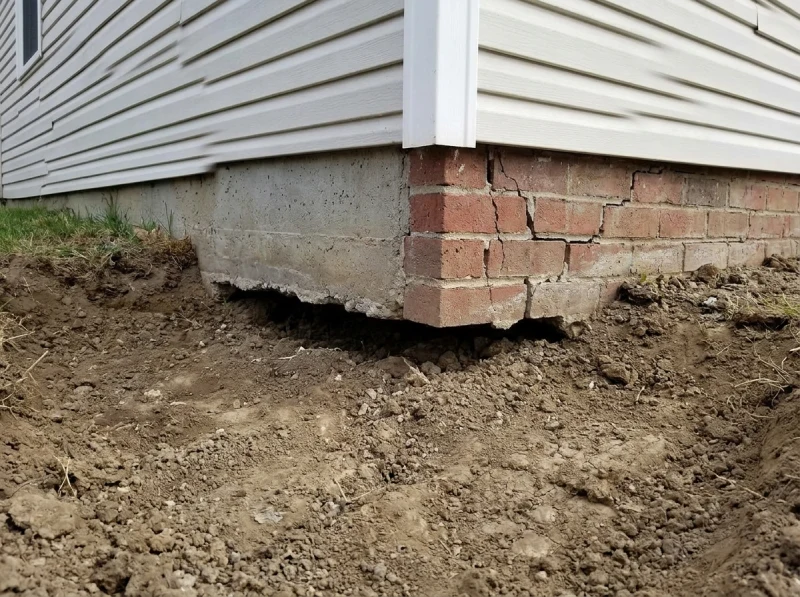
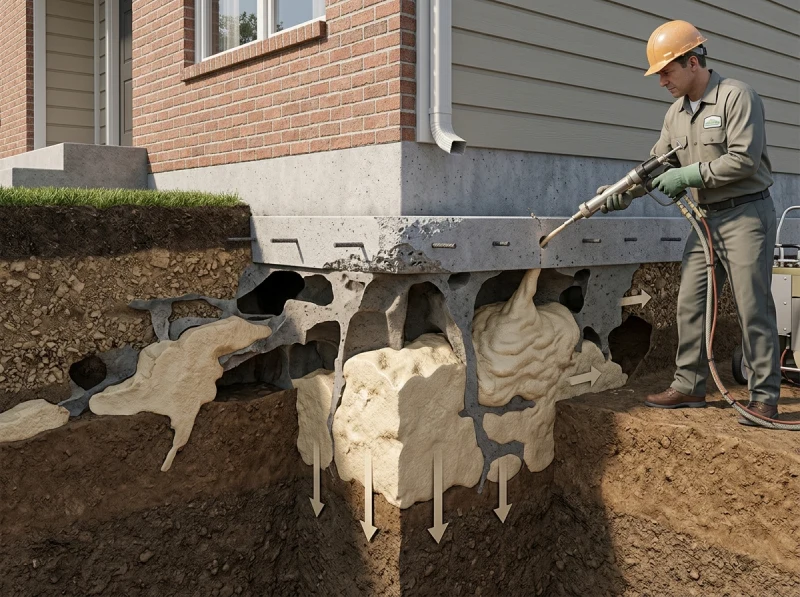
Subsurface voids weaken the performance of your foundation by removing the
support it depends on. As these gaps expand, they can cause uneven settlement,
slab deflection, and structural stress. Void filling is a precise process that injects
engineered materials into empty spaces beneath the foundation. This restores
uniform support, improves load distribution, and helps prevent further deterioration.
Depending on site conditions, void filling may be used as a standalone solution or
combined with other foundation stabilization methods such as compaction grouting or
underpinning systems.
- Restores contact between foundation and supporting soils
- Stabilizes slabs and reduces risk of settlement
- Fills hidden voids caused by erosion or soil movement
- Improves load distribution across the foundation
Structural Systems Approach to Home Repair

Assessment
Lorem ipsum dolor sit amet, consectetur dipiscing elit sed do eiusmod tempor

Diagnose
Lorem ipsum dolor sit amet,
consectetur dipiscing elit sed
do eiusmod tempor

Engineer
Lorem ipsum dolor sit amet,
consectetur dipiscing elit sed
do eiusmod tempor

Repair
Lorem ipsum dolor sit amet,
consectetur dipiscing elit sed
do eiusmod tempor
Frequently Asked Questions
What causes voids beneath my foundation?
Voids can develop from erosion, poor soil compaction during construction, or natural
soil movement over time. In Hawai‘i, heavy rainfall often accelerates this process by
washing away supporting soils beneath slabs and foundations.
How do I know if I have a void under my home?
Common signs include cracks in floors or walls, uneven or sinking slabs, and hollow-
sounding areas when walking on concrete. A professional assessment can confirm
the presence and extent of subsurface voids.
How does void filling fix the problem?
Void filling injects engineered materials beneath the foundation to fill empty spaces
and restore contact with the supporting soil. This stabilizes the structure, improves
load distribution, and helps prevent further settlement or damage.